Save 40% plus free shipping during our Summer Sale! Browse books.

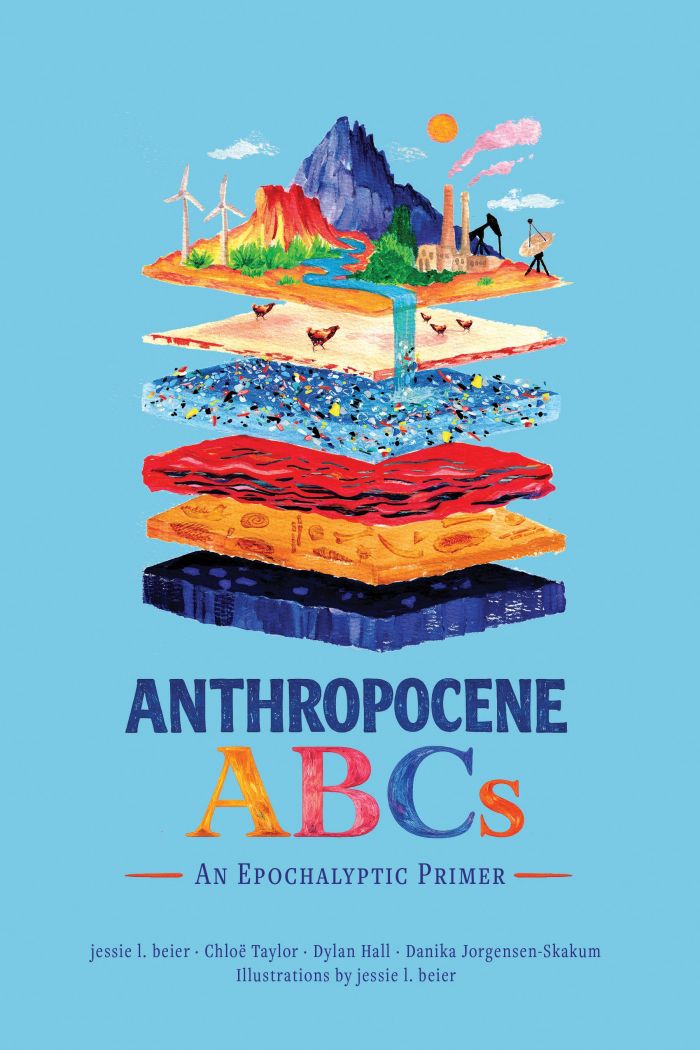
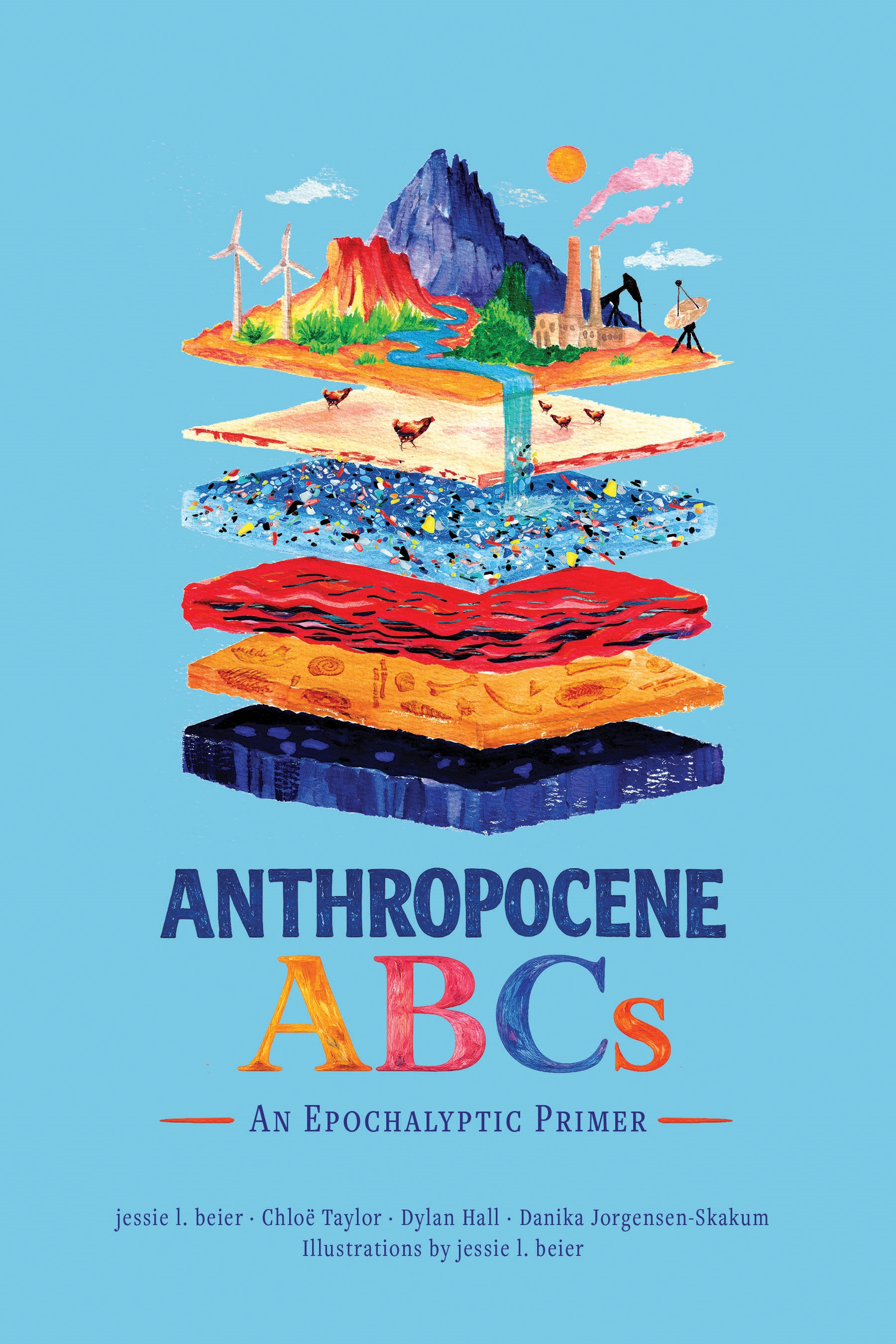
Anthropocene ABCs
An Epochalyptic Primer

This book can be opened with

An illustrated guide to the many names and political stakes of planetary crisis
What should we call an era marked by climate disruption, mass extinction, wildfire, pollution, and deep social inequality? Since the Anthropocene was popularized as the name for a proposed geological epoch – a name that was ultimately rejected by the scientific community – the term has generated intense debate across the sciences, humanities, and arts. Critics of the concept argue that humans are not equally responsible, pointing instead to capitalism, colonialism, racism, patriarchy, ableism, and other systems of power.
Anthropocene ABCs gathers alternatives to the Anthropocene in an accessible illustrated guide. Drawing on earth science, environmental history, feminist, queer, Indigenous, and disability studies, contemporary art, and popular culture, it considers what each proposed “-cene” reveals, what it conceals, and what political work it performs.
Moving from Anthropocene, A Billion Black Anthropocenes, and Capitalocene through the Disabilocene, Planthropocene, Nucleocene, Technocene, Urbanocene and Virocene (to name but a few), the entries trace the histories and arguments behind these terms. Some identify the forces driving planetary change. Others focus on its uneven effects or suggest different ways of living in a damaged world. Original color artwork by jessie beier draws on geological cross-sections, scientific illustration, and pedagogical diagrams, extending the book’s playful approach to scientific forms and classification.
The authors use the alphabet not to settle the debate but to test ideas. Their approach combines scholarship, wit, provocation, and what they call “serious play.” Rather than choosing one name, they ask whose histories these names emphasize, what responsibilities they demand, and which possibilities they open or close off. By treating naming itself as a political and pedagogical practice, Anthropocene ABCs offers a lively introduction to one of the defining debates in contemporary environmental humanities while inviting readers to imagine other ways of understanding—and inhabiting—our planetary present.
jessie l. beier is Assistant Professor of Art Education at Concordia University. She is the author of Pedagogy at the End of the World and co-creator of The Energy Emergency Repair Kit (Fordham).
Dylan Hall (Author)
Dylan Hall holds an MA in history from the University of Alberta. Hall’s research focuses on settler colonialism, mining, corporate agnotology, feminist science and technology studies, regenerative agriculture, and climate education.
Danika Jorgensen-Skakum (Author)
Danika Jorgensen-Skakum is a PhD candidate in political science at the University of Alberta.
Chloë Taylor (Author)
Chloë Taylor is Professor of Women’s and Gender Studies at the University of Alberta. She has written and edited books on Foucault, sexuality, prison abolition, critical animal studies, and social justice, including The Routledge Companion to Gender and Animals.