Save 40% plus free shipping during our Summer Sale! Browse books.

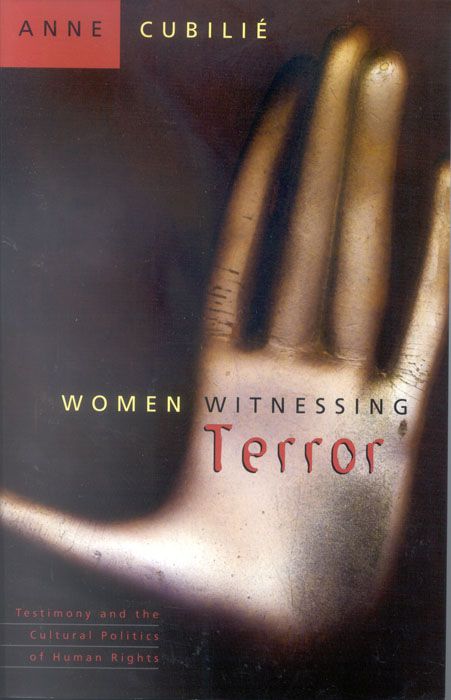
Women Witnessing Terror
Testimony and the Cultural Politics of Human Rights

Fordham University Press
This book can be opened with

A model of engaged scholarship, this book examines first-person testimonials by women who have survived abuse and atrocity in zones of conflict and terror. Drawing on a wide range of sources and settings, including genocide, state terror, ethnic cleansing, and war, Anne Cubilié uses survivor testimony as theoretical invention, placing personal witness in dialogue with work by philosophers, literary theorists, and others who study the space between victim and survivor, ethical witness and silenced observer, male and female. This nuanced example of ethical criticism demonstrates forcefully how ethical witnessing—listening to the voices of survivors— reformulates the language of human rights and enhances its ability to intervene against violence and oppression.
“Remarkably original. Not only does Cubilié explore an entire new ‘genre,’ if one can use such terms about the literature of atrocity, but she develops a new critical style of addressing the questions raised by the works."——Michael Ryan, Northeastern University
Anne Cubilie is a consultant in gender, human rights, and education at the United Nations.