Save 40% plus free shipping during our Summer Sale! Browse books.

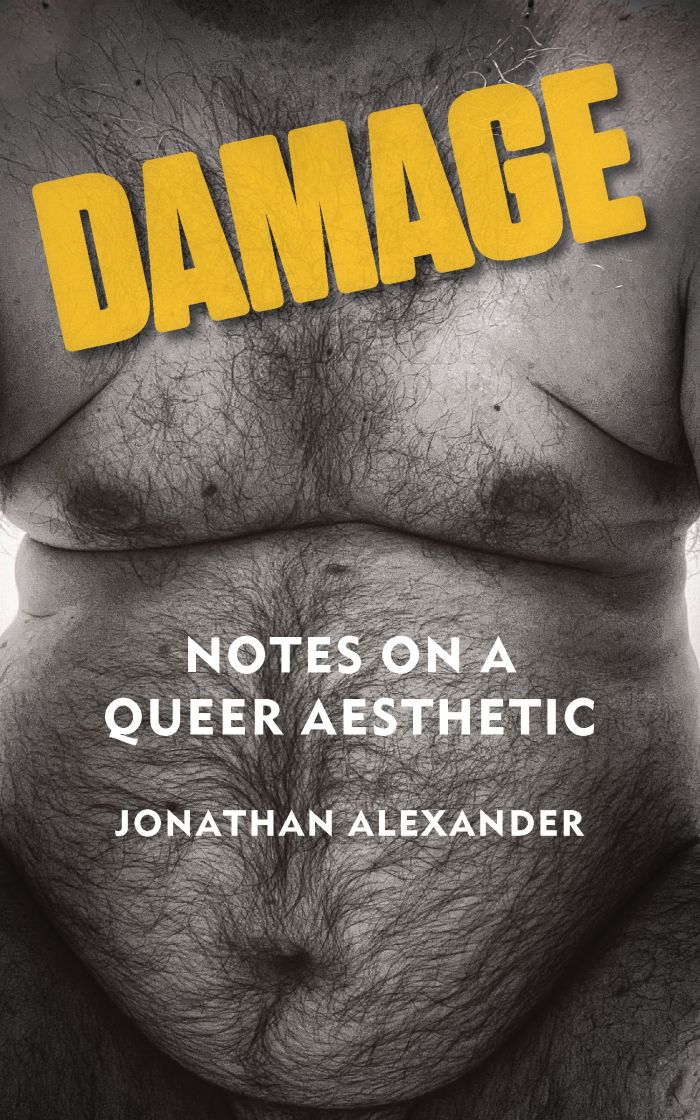
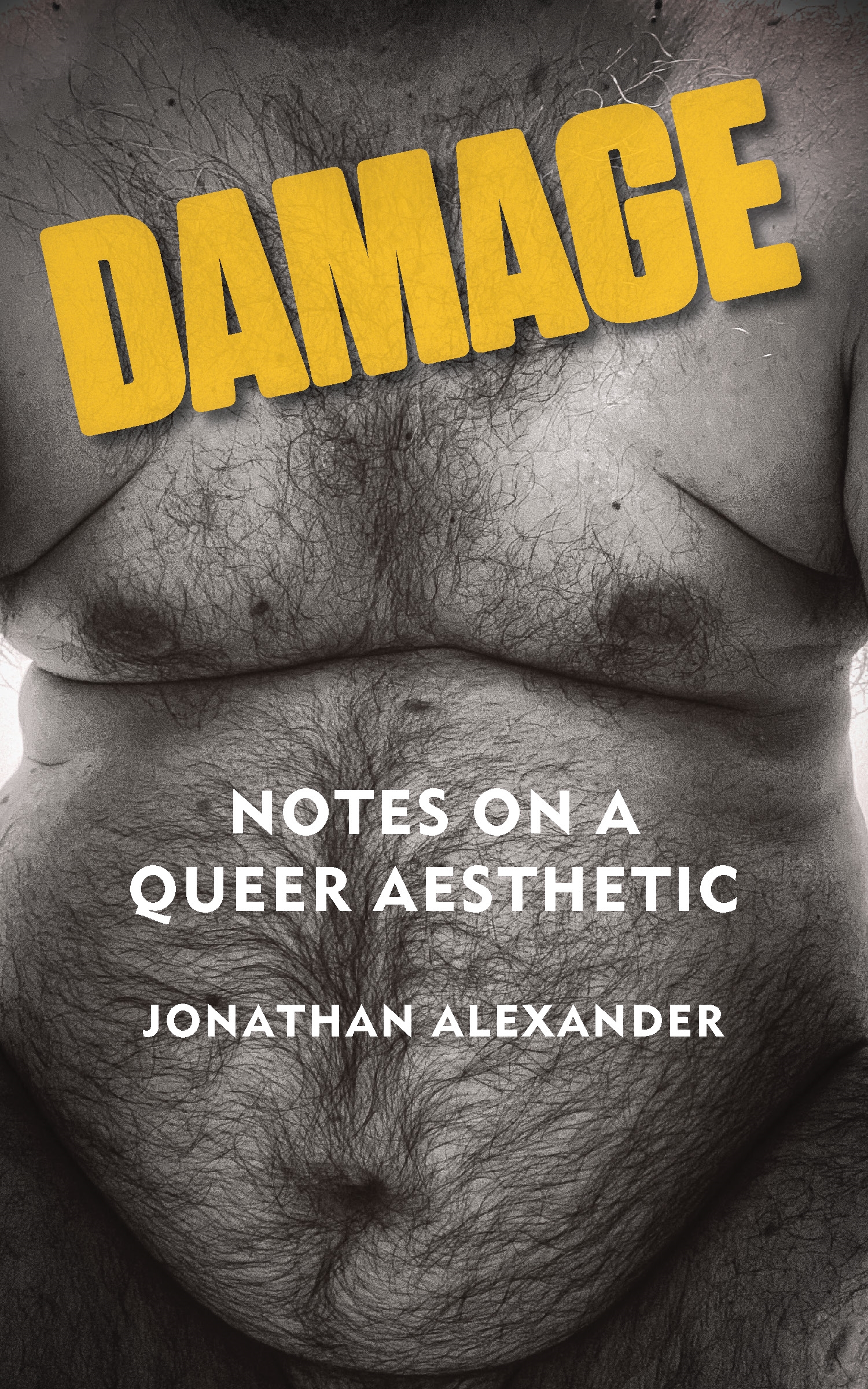
Damage
Notes on a Queer Aesthetic

This book can be opened with

A personal, critical guide to seeing queer art’s wounds and possibilities
Damage asks how to look at images marked by queer pain without turning that pain into shock or pretending it isn’t there. Writer and critic Jonathan Alexander answers by pairing close looking with lived experience. The result is intimate and analytic at once, a book that stays with hard feelings while still making room for possibility.
Damage blends personal story with cultural criticism. Here, first-person stories advance the ideas. Alexander uses scenes from his life to test claims about seeing, care, and repair. The “I” works as a method that keeps theory accountable to bodies and communities, to the facts of illness, stigma, racism, and homophobia.
Across five artists, Alexander traces how damage becomes material for art and a spur to relation. With Hervé Guibert, he considers self-imaging in the AIDS era as testimony and technique. With Mark Morrisroe, he follows Polaroids and punk intimacy to find a grammar of tenderness inside grit. Laura Aguilar anchors a practice of self-portraiture that scales from a solitary body to community, land, and kinship. Carlos Martiel turns performance into a register of how nations write on bodies through race, migration, and discipline. Catherine Opie models an ethic of looking that includes self-portrait and community portrait, attending to the marks of pleasure and hurt while asking what repair might involve.
Damage is compact and teachable. Each chapter opens with a scene of looking and moves to ideas readers can use. An interlude asks how beauty persists amid harm. A closing “Aftermath” offers practical ways to stay with difficult images without going numb. The prose is precise and direct. The claims are careful. The aim is not to cure pain, but to help readers recognize it, live with it, and act in its wake.
This work is original and stimulating. The particular method of critique and address is unique—drawing from autotheory and memoir, this author explicates several artists’ work by implicating themself in both interpretation and personal consequence. This sometimes brutal dance of explication and implication is a tour de force of personal writing. At the same time, the author skillfully brings in critical theory and philosophy to make the case for a new way of encountering queer art. It’s really well-done. Specialists in rhetoric and writing studies would welcome this book as a leading example of how to do queer rhetoric instead of just talk about it.—Jacqueline Rhodes, Joan Negley Kelleher Centennial Professor of Rhetoric and Composition at the University of Texas at Austin
A 'meditation on how to survive with pain' in relation to queer experience and visual artworks, Jonathan Alexander’s Damage is a beautiful book. It draws on queer feminist modes of deep interpretation, daring to expose the most intimate aspects of the personal and his own embodied proclivities and attachments/repulsions to do justice to the “damaged” bodies of queer culture—his own and those of artists from Laura Aguilar to Cathie Opie and Carlos Martiel. Most profoundly, the book deploys and explores queer images to make sense of how any or all of us survive and thrive with the pain of being human, demonstrating the power of pictures to transform.—Amelia Jones, Robert A. Day Professor at the Roski School of Art & Design, University of Southern California
Thinking about his own intrepid selfies alongside an archive of self-representations by important artist-activists, Alexander composes an impassioned meditation on the aesthetics of queer damage, one that ultimately, astonishingly longs toward the hope and beauty of a broken world. His disclosure of the vulnerable body—his own, our own—is an artistic offering of stunning generosity, a gift no less profound than the very possibility of joy.—Alice Dailey, Villanova University.
Most queer lives are marked by kinds of damage straight people will never know. There are some tried and true ways that queer art tries to work the damage, perhaps too quickly, into some other emotion, pride for example. Jonathan Alexander invites us to linger a little longer with what wounds, to find other paths to ongoingness, in queer art and life. His willingness to be present for those discomforting moments leads to rich readings of some of the canonic images and image makers of gay life.—McKenzie Wark, author of Love and Money, Sex and Death and Reverse Cowgirl
In Damage, Jonathan Alexander considers the work of artists and thinkers as disparate as Herve Guibert and Laura Aguilar to examine the damage and shame that persists beneath the surface of contemporary queer culture. Erudite and audacious, Alexander is one of the most intelligent critics of gender and literature. This work is a bracing new provocation.—Chris Kraus, author of The Four Spent the Day Together
Beginnings | 1
Hervé Guibert | 24
Mark Morrisroe | 42
Laura Aguilar | 64
An Interlude on the Beautiful in the Midst of Damage | 87
Carlos Martiel | 96
Catherine Opie | 109
The Aftermath | 128
Acknowledgments | 139