Save 40% plus free shipping during our Summer Sale! Browse books.

Becoming Loyal Americans
The Movement to Reclassify Italian Alien Enemies during the Second World War

This book can be opened with

A critical read for exploring the discursive links to the origins of fascist and antifascist rhetoric in the United States
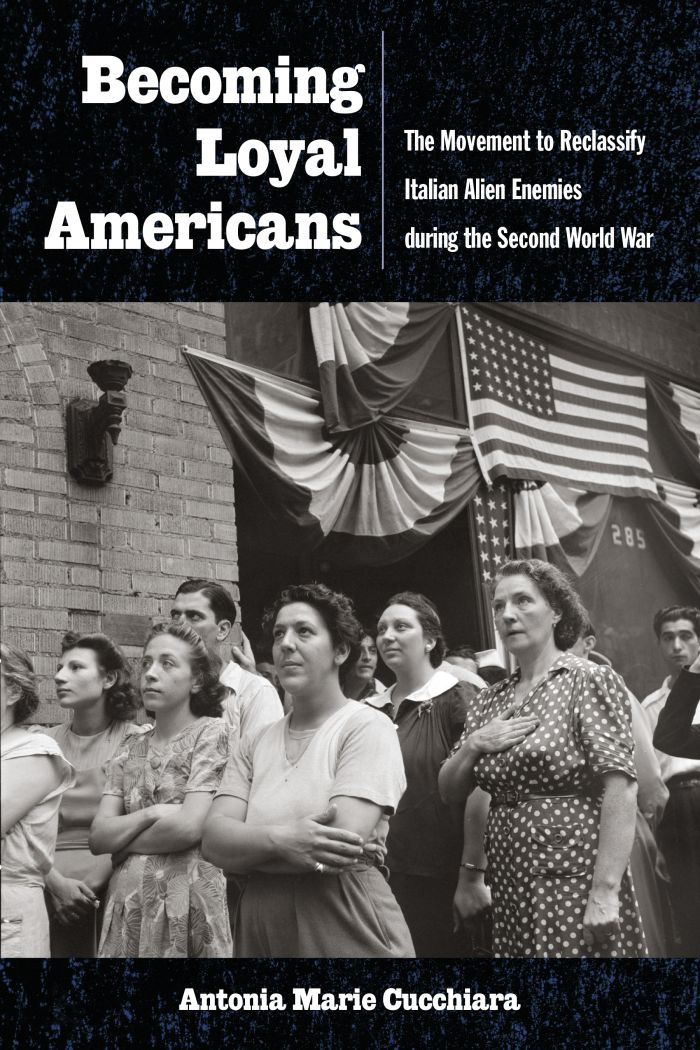
Becoming Loyal Americans is a study of the Italian American movement during the Second World War to reclassify not only the status of alien enemy but also the perception of the ethnic community as singularly loyal to the United States. The book argues that the anti-fascist actors at the helm of this movement, although seeking liberative ends to lift discriminatory wartime legislation and defeat Benito Mussolini, reproduced fascist political myths to realize movement success. These political myths, in turn, were appropriated by the Roosevelt administration to secure the ethnic bloc’s continued wartime support. Cucchiara considers the implications of this discourse’s legacy for the ethnic community and the American body politic, as these political myths, no matter how reworked to fit an emancipatory framework, were carriers of narrative elements steeped in a history of domination and violence. The result opened the possibility for these political myths to be mined by future actors, regardless of ethnic background, to realize illiberal ends.
Becoming Loyal Americans is the first book on the reclassification movement. It provides a fresh perspective and original insight into debates within Italian American studies regarding wartime identity, the continued utility and appeal of a fascist imaginary, and the strength of ancestral ties to Italy. This book also presents a timely account of the implications of divisive political discourse and policies for people with roots in nations that the American government deems the “enemy.” It engages with questions that are as relevant then, as they are now, regarding the construction of ethnic and civic identity for alienated groups, the forging of dual commitments within discriminatory legislative and discursive constraints, and the channels by which immigrant and ethnic communities navigate affiliations, affections, forms of patriotism, and a sense of civic duty to the United States and their respective countries of origins.
The book constitutes a significant contribution to the scholarship on Italian American history during the Second World War, particularly through its focused examination of the influential figure of Luigi Antonini—his intellectual positions, anti‑fascist activism, lobbying strategies, and rhetorical practices. Especially noteworthy is the author’s analysis of Antonini’s efforts to dismantle the myths propagated by Mussolini within Italian American communities, an undertaking aimed at countering the pervasive ‘enemy alien’ stigma.—Matteo Pretelli, Associate Professor, The University of Naples "L'Orientale"
The monograph is based on solid and thorough empirical research and. . .offers a thought-provoking analysis of a discursive shift from fascism to anti-fascism within the Italian American community. . . this outstanding book will without doubt constitute a major contribution to the field.—Kasper Braskén, Associate Professor, Academy Research Fellow in political history, University of Helsinki, co-editor of Anti-Fascism in a Global Perspective and Anti-Fascism and Ethnic Minorities