Save 40% plus free shipping during our Summer Sale! Browse books.

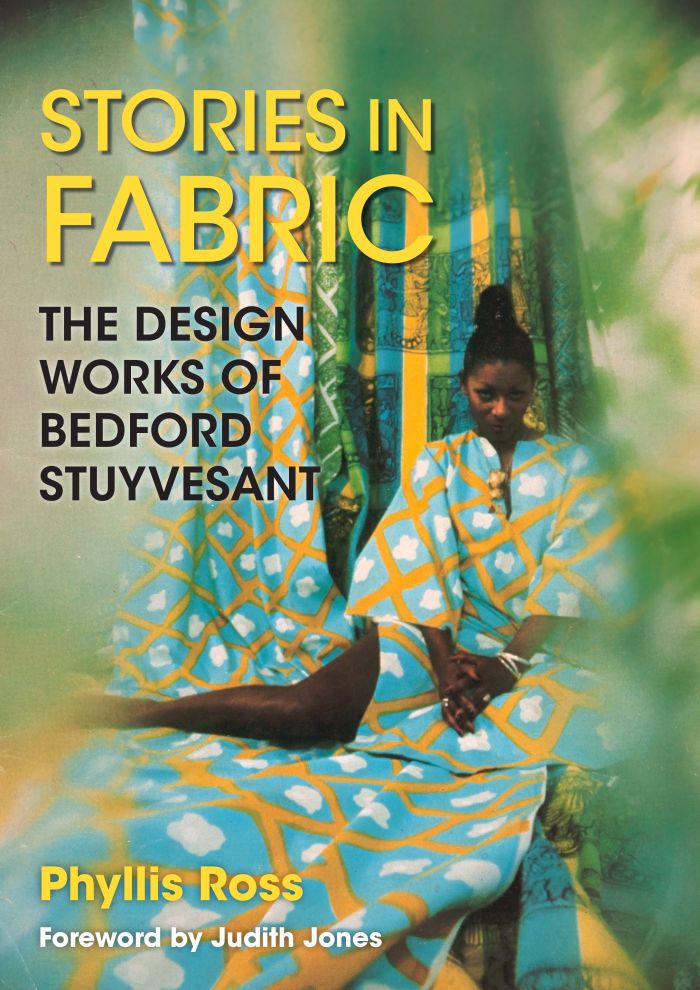
Stories in Fabric
The Design Works of Bedford Stuyvesant

This book can be opened with

The untold history of a pioneering Black design company in Bed-Stuy whose creativity garnered national attention in the 1970s
In Stories in Fabric: The Design Works of Bedford Stuyvesant, design historian Phyllis Ross uncovers the rise of a groundbreaking African American textile studio founded in Brooklyn in 1969. The Design Works of Bedford Stuyvesant began as a collaboration between Jacqueline Kennedy Onassis and textile designer Leslie Tillett. Through Senator Robert F. Kennedy’s urban renewal vision, they grew it into a nationally recognized brand that celebrated African sources and Black pride, bringing national attention to neighborhood ambition.
Ross follows Design Works from hand-printed textiles to a broader licensing and printing operation that put African-inspired patterns into homes across the country. The company’s visibility soared through high-profile showcases and museum partnerships, including a spectacular Metropolitan Museum event and later exhibitions that showed how its patterns connected to African art, flora, and fauna. These collaborations helped shift perceptions of Bed-Stuy from crisis to creativity and possibility.
At the heart of the story are the people who made the designs and made the business work, including post-war textile designers D. D. Tillett and Leslie Tillett. Early artistic direction came from designers such as Callie Simpson Thomas, followed by head designer Sherl Nero, whose talent and market instincts shaped the brand’s evolution. Under president Mark Bethel, the pivot to licensing carried Design Works into the national marketplace, even as the company continued to navigate tensions among social mission, profitability, and cultural representation.
Drawing on deep archival research and interviews, Ross traces Design Works’ evolution against the backdrop of the Civil Rights and Black Power movements, and the practical realities of community development and corporate partnerships. The result is a vivid portrait of collaboration across communities and institutions, and a reclamation of a significant episode in twentieth-century design and African American urban history.
Stories in Fabric tells the remarkable history of Design Works, a textile studio in Bedford-Stuyvesant, Brooklyn, that produced African-inspired fabrics for the American home furnishing market during the 1970s. Bringing together histories of Civil Rights activism, white philanthropy, community development, and the Black Arts Movement, design historian Phyllis Ross details the complexity of Design Works as a commercial, political, and artistic enterprise. The book begins with the patronage of Jacqueline Kennedy Onassis and commercial savvy of famed designers D.D. and Leslie Tillett. By the end, the story belongs to Sherl Nero, an African American textile maker and the studio’s head designer, whose bestselling Bakuba fabric collection made Design Works a household name. Writing with an expert eye for the art, business, and politics of textile design, Ross illuminates an important chapter in the history of twentieth century textiles with implications for how we think about the politics of race in the business of design today.—Chris Dingwall, PhD, Assistant Professor of Design History, Sam Fox School of Design & Visual Arts, Washington University in St. Louis
This is a fascinating book that combines, in a unique way, elements of business history, visual art history, and African American urban history. . .The author brings an original story and a deeply researched book that specialists will welcome. . . Ross’s contribution to scholarship on New York City, Brooklyn specifically, and the history of the 1970s is welcomed to the field . . . I think this book is important and special.—Brian Purnell, author of Fighting Jim Crow in the County of Kings: The Congress of Racial Equality in Brooklyn
When Phyllis Ross reached out to introduce herself and her research, what followed was a deeply engaging conversation about a story that had largely remained at the margins of design history. In Stories in Fabric, Ross brings more than scholarly interest to this remarkable initiative. Having come of age during the civil rights era—and participated in pivotal moments such as the 1963 March on Washington and volunteer work in Selma—she brings a hard-won understanding of the world that made Design Works both necessary and possible. The result is a story of resilience, creativity, and possibility.—Yvonne Watson, Vice Provost Global Strategy and Academic Partnerships + Associate Professor School of Fashion, Parsons School of Design—The New School
Stories in Fabric is an exciting and important history of Design Works of Bedford Stuyvesant. Ross has written a compelling narrative that expertly brings together issues of urban development and community planning; postwar dynamics of race, class, and power in the U.S.; and a deep, attentive analysis of the textile designs. The collection of excellent illustrations and the fascinating story that includes A-list celebrities and under-appreciated designers make this an extremely valuable contribution to design history, urban history, and histories of consumption in the U.S.—Kristina Wilson, Ph. D. Professor of Art History, Chair of Department of Visual and Performing Arts, Clark University
Ross makes the most of this extraordinary story of Black entrepreneurship and design excellence shaping the taste of the American luxury and mass markets through opportunities created by Bobby Kennedy, Jacqueline Onassis, and their elite circles. Both a business and design history, Ross draws out fascinating insights about race and power, cultural appropriation and integration, and the meaning of success and failure. Lavishly illustrated, the images alone say so much about what was gained and lost in this bid to bring Black design to middle America.—Karen Ferguson, Simon Fraser University
The Design Works of Bedford Stuyvesant initiative showcased the life-changing power of well-designed creative public/private collaborations, even when they are not sustainable long term. I was honored to meet Phyllis Ross and provide her access to the Bedford Stuyvesant Restoration Corporation’s history-filled archives. Phyllis relentlessly pursued her research with appreciation, respect and care. Her chronicle of this pioneering enterprise will memorialize its significance of the effort and spur new initiatives to elevate the economic and spiritual well-being of marginalized communities.—Colvin Grannum, CEO of Restoration 2001-2022
Phyllis Ross's Stories in Fabric recovers the remarkable history of Black creative enterprise in Brooklyn, and the designers whose vision and craft shaped it. At the heart of this story is Sherl Nero, a designer whose extraordinary talent and range deserve far wider recognition. Nero’s designs are rooted in the deep study of African craft traditions and American folk art - from Kuba raffia weaving and Yoruba adire, to Javanese batik and American patchwork quilting - producing work that was aesthetically visionary, culturally transformative, and signified Black pride for a whole generation of consumers. This is among the most powerful stories in fabric that American design history has yet to tell. Through meticulous scholarly care and archival work, Ross tells it beautifully. For anyone working at the intersection of design history, African American studies, and material culture, Stories in Fabric is essential reading and long overdue.—Christina H. Moon, Parsons School of Design
Foreword by Judith Whitehead Jones | vii
Preface | xi
Introduction | 1
1. Design Works Is Launched | 16
2. Design Sources, Methods, and Patterns | 30
3. Staffing, Production, and Marketing | 66
4. Collaborations and a New Business Model | 86
5. Design Works Becomes a National Brand | 102
6. From the Pinnacle to Dissolution | 145
Conclusion | 179
Acknowledgments | 191
Appendix A: Design Works Exhibitions | 195
Appendix B: Design Works Licensees | 196
Abbreviations | 197
Notes | 199
Index | 227